
Buying your first home is an exciting milestone, but it can also feel overwhelming. If you’re planning to build rather than buy an existing home, you’ll probably have questions about deposits, finance, government incentives and what the building process actually looks like.
The good news? Building your first home may be more achievable than you think. Here’s what you need to know before getting started.
Do You Need a 20% Deposit?
Not necessarily.
While a larger deposit can reduce your borrowing costs, many eligible first home buyers can build with much less. Depending on your lender, your deposit may come from genuine savings, gifted funds from family, equity or eligible government assistance.
Speaking with a mortgage broker or lender early can help you understand how much you can borrow and what options are available.
Government Assistance Could Help You Get There Sooner
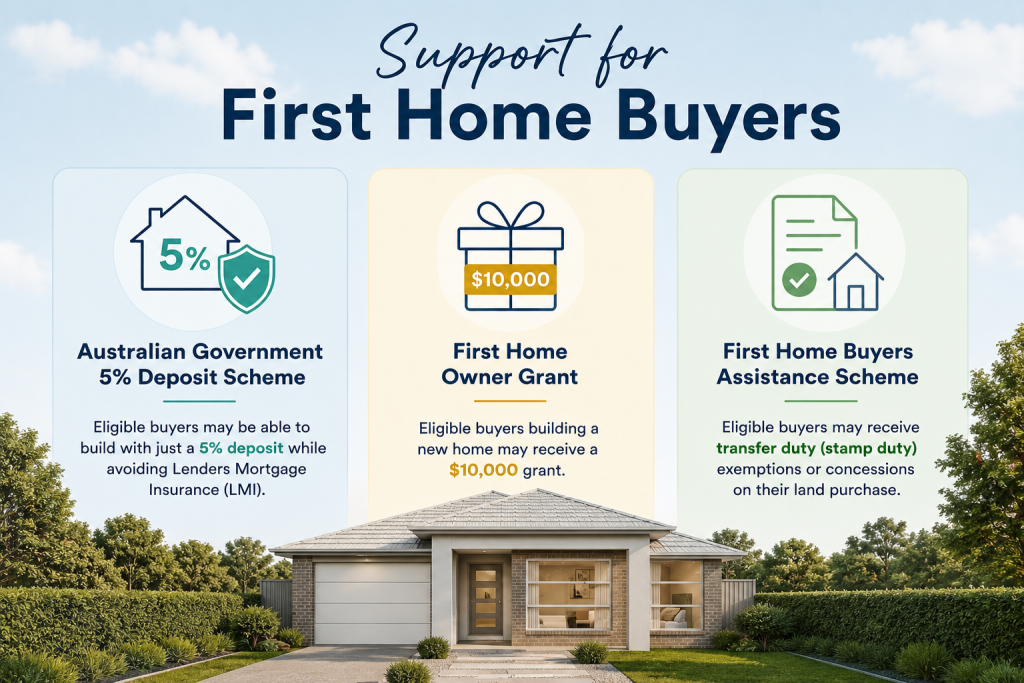
Several government initiatives are designed to make building a first home more affordable.
These may include:
- Australian Government 5% Deposit Scheme – Eligible buyers may be able to build with just a 5% deposit while avoiding Lenders Mortgage Insurance (LMI).
- First Home Owner Grant – Eligible buyers building a new home may receive a $10,000 grant.
- First Home Buyers Assistance Scheme – Eligible buyers may receive transfer duty (stamp duty) exemptions or concessions on their land purchase.
As eligibility requirements can change, it’s always worth checking with your lender or mortgage broker.
Why Building Is Different
Building a new home usually involves two separate contracts:
- A land contract to purchase your block.
- A building contract to construct your home.
One of the advantages is that transfer duty is generally only payable on the land purchase, not on the cost of building your home.
How the Building Process Works
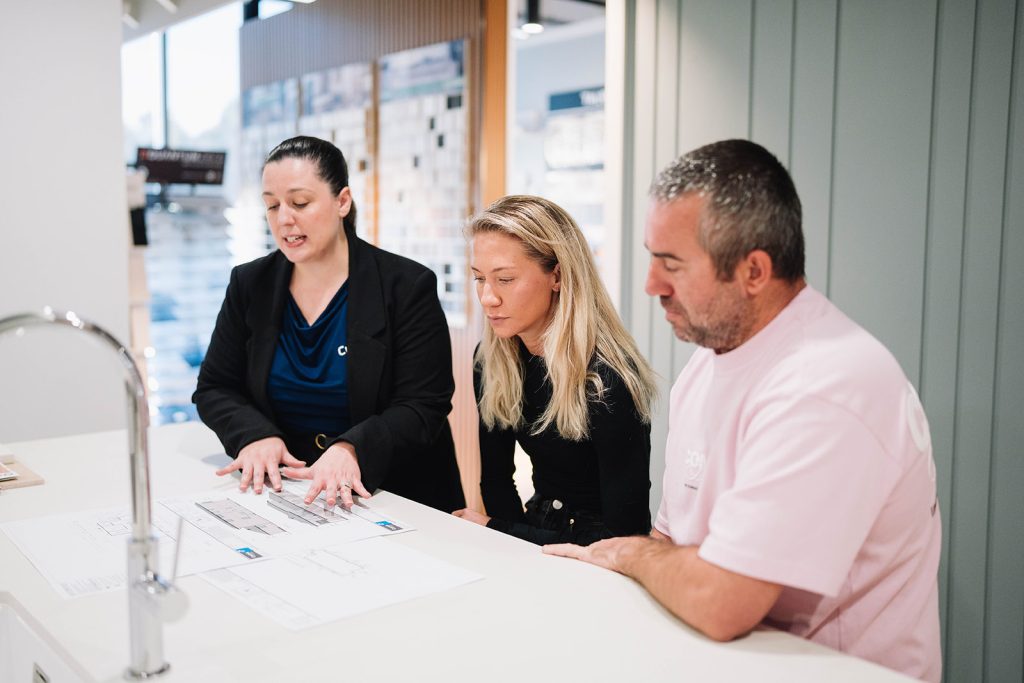
Once your land and finance are organised, the process is relatively straightforward:
- Purchase your land.
- Finalise your building contract and finance.
- Complete approvals and selections.
- Construction begins.
- Progress payments are made throughout the build.
- Receive the keys to your new home.
Unlike a standard home loan, construction loans are paid in stages as your home is built, so you’re generally only paying for completed work at each milestone.
A Few Common Questions
Can I use the First Home Owner Grant as my deposit?
It depends on your lender and loan structure. Some eligible buyers using the Government’s 5% Deposit Scheme may be able to put the grant towards their required deposit.
Can my parents help with my deposit?
Many lenders accept gifted funds from immediate family members, although policies vary.
Who should I speak to first?
A mortgage broker or lender can explain your borrowing capacity, available grants and loan options before you start your home-building journey.
Start Your Home Building Journey with Confidence
Building your first home doesn’t have to be complicated. Understanding your finance options, available government assistance and what to expect during construction can help you make informed decisions from day one.
With the right advice and a clear plan, you’ll be well on your way to turning your dream of home ownership into reality.
Read our guide for First Home Buyers at the link here to learn more about how you can start your home owner journey with confidence.